
06.09.26
How to start a barefoot shoe brand without holding inventory
You do not need a warehouse, a minimum order or a tooling budget to start a barefoot shoe brand. You need a maker who produces to order, a product your customers cannot find cheaper elsewhere, and a way to test sizes before you commit. Here is how partners do it with us, step by step.
1. Decide what "your brand" will mean
Most new barefoot brands are not shoe designers; they are people with an audience who trust them — a foot-health educator, a slow-living shop, a studio with members. The product can be an existing handmade model carrying your name. That is what private label is: the shoe is made in our atelier, your logo is laser-engraved on the insole, the box is plain. Your customer sees your brand and a hand-stitched leather barefoot shoe. What you own is the customer relationship and the story you tell.
2. Choose a maker who produces to order
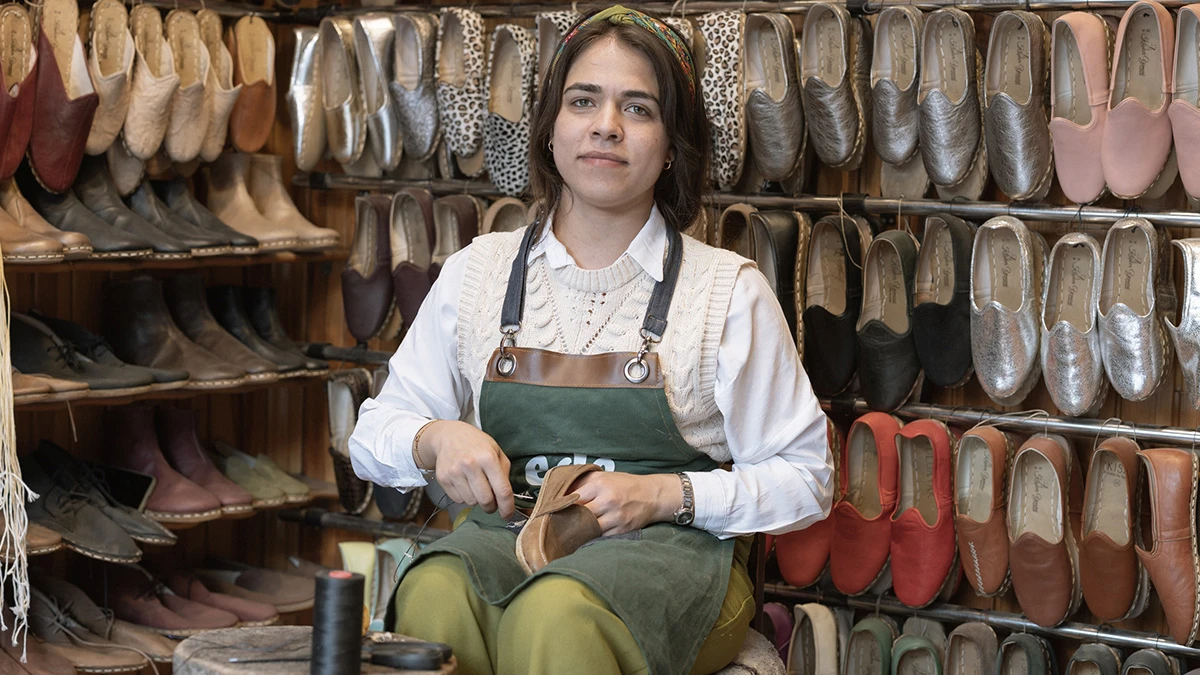
The reason most shoe brands fail early is stock: sizes that do not sell, colours that do. A made-to-order atelier removes that risk. Each pair is cut and stitched after your customer buys it, so you never own a size 42 nobody wanted. At Ede a single pair is an order; production is five business days, then seven to nine days in transit to the US or Europe with duties paid.
3. Start with two or three models, not twelve
A loafer and a ballet flat in two leathers will teach you more in a month than a full range will in a year. Loafers are the easiest first barefoot purchase because they read as an ordinary shoe; a boot in autumn is the second. Add models as customers ask, not before.
4. Hold one pair, not a rack
Order a single sample at the page price. Photograph it, wear it, let it show you how the leather softens. Its price is credited back when you place your first carton. If you sell in person — a shop, a studio, a market — that same pair becomes your fit kit: a customer tries the size on, you order theirs.
5. Price from the shoe, not from the competition
Our dropship prices are printed on every product page — $99 to $129 per pair — with a suggested retail from $140. Complete a carton of ten and $10 comes off each pair. Price at or above the suggested retail and your margin stays intact on every channel; go below it and you compete with your own resellers.
6. Let sizing be your customer service, not your risk
Barefoot lasts run wider and flatter than fashion lasts, so customers often land a half size off their usual. Publish the size guide with foot measurements, ask customers to measure, and allow for a small share of exchanges in your policy — five to ten percent is normal in footwear. Made-to-order does not mean unsellable: an exchanged size waits for the next customer.
7. Reinvest as you sell
The first ten orders will tell you which leather and which model your audience wants. When the pattern is clear, move that model to a wholesale carton and keep the rest on dropship. You grow the range with money the range has already made.
If this is the shape of the brand you have in mind, tell us how you plan to sell and we will send a written proposal before any call: request a partnership proposal.